

Starting a new job feels exciting, but it can also feel a little overwhelming. 😊 A kind welcome message from your manager or team can turn nerves into comfort in seconds.
Replying with a thank you for warm welcome email is more than good manners. It shows gratitude, builds trust, and sets a positive tone for your new journey. 🌟
In this guide, you’ll find 90+ ready-to-use captions, templates, and subject lines. Whether you need something short, formal, or friendly, you’ll find the perfect words below. 💌
What Is a “Thank You for Warm Welcome” Email?
- A short reply sent to thank someone for welcoming you warmly. It shows appreciation and kick-starts a positive connection. 🤝
- This email confirms you received the welcome message and feel valued. It’s a small gesture that leaves a lasting impression. 💫
- It reflects professionalism while keeping a personal, genuine tone. A simple thank you can open doors to stronger relationships. 🌸
When you should send a warm welcome thank-you email
- Send it within 24 hours of receiving the welcome message. Quick replies show enthusiasm and respect for others’ time. ⏰
- Ideal after your first day, onboarding, or a warm team greeting. Timing matters just as much as the words you choose. 📅
- Don’t wait too long, or the moment may lose its warmth. A prompt thank you keeps the good energy alive. ✨
Who should receive it (manager, team, HR, client)
- Your manager deserves thanks for guiding your smooth transition. It builds trust and shows you value their leadership. 👔
- Team members appreciate a thank you for their friendly welcome. It strengthens bonds before you even start working together. 🧑🤝🧑
- HR and clients also deserve a polite thank-you note. It reflects professionalism across every relationship you build. 📩
Difference between a welcome reply and a thank-you email
- A welcome reply simply acknowledges the message you received. A thank-you email adds genuine appreciation and warmth. 💛
- Welcome replies are often quick and casual in tone. Thank-you emails focus more on gratitude and connection. 🌷
- Both matter, but a thank-you note feels more personal. It shows thoughtfulness beyond a simple acknowledgment. 🙏
Why You Should Send a Thank You for Warm Welcome Email
- Sending gratitude early builds trust from day one. Small gestures often create the biggest impressions. 🌟
- It shows you’re attentive, respectful, and easy to work with. People remember those who express genuine appreciation. 💫
- A thoughtful reply reflects positively on your character. It’s a simple step toward meaningful workplace relationships. 🤝
Builds positive first impressions
- First impressions shape how colleagues see you long-term. A warm thank you starts your journey on the right note. 🌸
- People notice thoughtful gestures more than perfect words. Your gratitude instantly makes you approachable and likable. 😊
- A strong start builds confidence for future interactions. It shows you’re excited and ready to contribute. 🚀
Shows professionalism and gratitude
- Professionalism isn’t just about skills, it’s about manners too. A thank-you email reflects maturity and workplace etiquette. 📩
- Gratitude expressed early shows emotional intelligence and respect. It tells your team you value their effort. 💼
- Small professional gestures often leave the biggest impact. A polite reply speaks volumes about your character. 🌟
Strengthens team relationships
- Gratitude creates a bridge between you and your teammates. It opens the door to easier collaboration ahead. 🤗
- Acknowledging kindness helps build trust from the very start. Strong relationships often begin with small thank-you notes. 💛
- A warm reply invites open, friendly communication. It makes future teamwork feel more natural and easy. 🌿
Sets the tone for collaboration
- Your first message sets expectations for how you’ll communicate. A positive tone encourages open and honest teamwork. 🌈
- Gratitude signals that you’re approachable and cooperative. It makes colleagues feel comfortable reaching out anytime. 📬
- Setting a warm tone early helps future projects run smoothly. It reflects a mindset of collaboration, not competition. 🤝
Thank You for Warm Welcome Email Examples
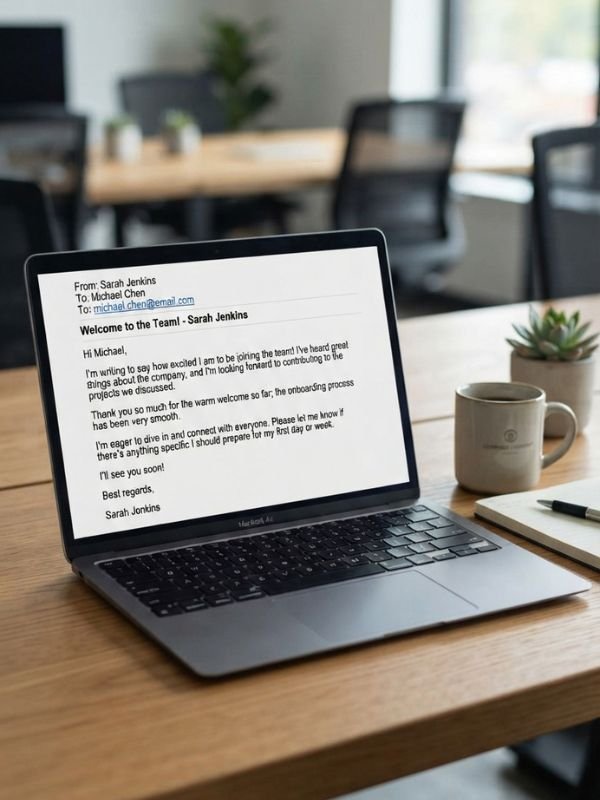
- Real examples help you find the right words instantly. They save time while keeping your message genuine. ✍️
- Each example below fits different tones and situations. Pick one that matches your workplace culture best. 🌸
- Personalize these examples to reflect your own voice. Authenticity always makes a thank-you message stronger. 💌
Thank you for warm welcome email to manager
- “Thank you for the warm welcome; it truly means a lot.” I’m excited to learn and grow under your guidance. 🙏
- “I appreciate you making my first day feel comfortable.” Looking forward to contributing to the team’s success. 🌟
- “Your welcoming words made my transition much smoother.” Thank you for your support and encouragement. 💼
Thank you for warm welcome email to team
- “Thank you all for the warm welcome; it made me feel at home.” Excited to work alongside such a supportive team. 🤗
- “I really appreciate everyone’s kind words on my first day.” Can’t wait to collaborate and grow together. 🌿
- “Your friendly welcome made settling in so much easier.” Thank you for being so welcoming and kind. 💛
You May Also Like These Love Messages to My Wife
Thank you for warm welcome email to HR
- “Thank you for making the onboarding process smooth and welcoming.” I appreciate your guidance during this transition. 📩
- “Your warm welcome made me feel valued from day one.” Thank you for your support throughout the process. 🌸
- “I’m grateful for how organized and friendly the onboarding was.” It made my first day stress-free and enjoyable. ✨
Thank you for welcoming me to the team email
- “Thank you for welcoming me so warmly to the team.” I’m looking forward to working closely with all of you. 🤝
- “I appreciate everyone’s kindness during my first week.” Excited to contribute and grow alongside this team. 🌟
- “Your warm welcome made a big difference for me.” Thank you for making me feel included right away. 💫
Short thank you for warm welcome email
- “Thank you for the warm welcome; I truly appreciate it.” Excited to get started and contribute soon. 🙌
- “Thanks so much for making me feel welcome here.” Looking forward to working with the team. 🌸
- “Grateful for such a kind welcome on my first day.” Excited for what’s ahead together. 💛
Formal thank you for warm welcome email
- “I sincerely appreciate the warm welcome extended to me.” It reflects the professionalism of this organization. 📩
- “Thank you for your gracious welcome and guidance.” I look forward to contributing meaningfully to the team. 💼
- “Your welcome has made my transition seamless and comfortable.” I appreciate your continued support going forward. 🌟
Friendly thank you for warm welcome email
- “You all made my first day feel so much fun!” Thank you for such a friendly welcome. 😄
- “I already feel like part of the team, thanks to you all.” Excited for the journey ahead together. 🌈
- “Thanks for the warm hugs and friendly smiles today.” Can’t wait to get to know everyone better. 🤗
Thank You for Warm Welcome Email Templates (By Situation)
- Templates save time while keeping your tone consistent. Adjust small details to match your unique situation. 🖊️
- Each template fits a specific workplace scenario perfectly. Choose one that reflects your current experience. 🌸
- Personal touches make templates feel authentic and heartfelt. Add a sentence or two that’s uniquely yours. 💛
After joining a new job
- “Thank you for the warm welcome to the team.” I’m thrilled to begin this new chapter with you all. 🌟
- “I appreciate everyone’s kindness on my very first day.” Looking forward to learning and contributing quickly. 🙏
- “Starting here already feels exciting thanks to your welcome.” Grateful for such a positive beginning. 💫
First day at work thank-you email
- “Thank you for making my first day so welcoming.” I truly appreciate everyone’s warmth and support. 🌸
- “My first day exceeded expectations thanks to this team.” Excited to keep building on this great start. 🤝
- “I felt right at home from the moment I arrived.” Thank you for such a thoughtful welcome. 💛
After onboarding or orientation
- “Thank you for such a smooth and welcoming onboarding process.” I feel prepared and excited to begin working. 📩
- “The orientation made me feel confident and informed.” Thank you for your time and guidance. 🌟
- “I appreciate how organized and friendly onboarding was.” It made settling in incredibly easy. ✨
Remote job warm welcome thank-you email
- “Thank you for the warm virtual welcome to the team.” Excited to collaborate, even from a distance. 💻
- “Even remotely, I felt genuinely welcomed by everyone.” Looking forward to our first virtual meeting. 🌐
- “Your kind welcome message made remote onboarding feel personal.” Thank you for making me feel included. 💛
Thank you for warm welcome email after internal transfer
- “Thank you for welcoming me warmly to the new team.” Excited to bring my experience into this new role. 🔄
- “I appreciate the smooth transition and friendly welcome.” Looking forward to contributing in this new department. 🌟
- “Thank you for making this internal move feel comfortable.” Grateful for such a supportive team. 🙏
How to Write a Thank You for Warm Welcome Email

- Keep your message sincere, short, and easy to read. Authentic words always feel more meaningful than perfect ones. ✍️
- Focus on gratitude first, then express future enthusiasm. This structure keeps your email clear and purposeful. 🌸
- End with a positive note that reflects your personality. A warm closing leaves a lasting good impression. 💌
Start with the right greeting
- Use the recipient’s name for a personal touch. A warm greeting sets the tone instantly. 👋
- Keep greetings simple, like “Hi [Name]” or “Dear [Name].” Simplicity works best for professional communication. 📩
- Match your greeting style to the workplace culture. Formal teams may prefer traditional greetings. 🌟
Express appreciation clearly
- Say thank you directly within the first sentence. Clarity ensures your gratitude isn’t missed. 🙏
- Mention specifically what you’re thankful for. Specific gratitude feels more genuine and thoughtful. 💛
- Avoid vague phrases that sound generic or robotic. Genuine words always resonate more with readers. 🌸
Mention enthusiasm for the role or team
- Share your excitement about starting this new journey. Enthusiasm shows you’re motivated and engaged. 🚀
- Mention specific goals you’re eager to work toward. This adds authenticity to your message. 🌟
- Let your personality shine through your excitement. It helps colleagues connect with you faster. 😊
You May Also Like These How Is Your Day Going? Best Replies
Keep it professional and concise
- Stick to a few short, meaningful sentences. Long emails can lose the reader’s attention. 📩
- Avoid unnecessary details that dilute your message. Simplicity keeps your gratitude clear and impactful. ✨
- Proofread before sending to maintain professionalism. Small errors can distract from your sincere message. 🌸
Close politely with your name
- End with “Best regards” or “Sincerely” followed by your name. A polite closing completes your professional tone. 📝
- Avoid overly casual sign-offs in formal settings. Match your closing tone to the email’s overall style. 💼
- A clean closing leaves a strong final impression. It shows attention to detail and respect. 🌟
Subject Line Ideas for Thank You for Warm Welcome Emails
- Subject lines should be clear, warm, and inviting. They set expectations before the email is even opened. 📬
- Keep subject lines short to grab quick attention. Simplicity often works better than clever phrasing. ✨
- Personalize subject lines when possible for better engagement. It shows thoughtfulness right from the inbox. 💌
Professional subject lines
- “Thank You for the Warm Welcome” Simple, respectful, and instantly clear. 📩
- “Grateful for Your Warm Welcome to the Team” Professional yet warm in tone. 🌟
- “Appreciation for a Wonderful Welcome” Reflects gratitude with a formal touch. 💼
Friendly subject lines
- “Thanks for Making Me Feel So Welcome!” Warm, casual, and full of positivity. 😊
- “Loved My Warm Welcome Today!” Friendly tone that feels genuine and light. 🌈
- “So Grateful for Such a Kind Welcome!” Perfect for a relaxed workplace culture. 🤗
Short subject lines that work
- “Thank You for the Welcome” Simple, direct, and effective. 🙏
- “Grateful and Excited to Join” Short yet full of positive energy. 🌸
- “Appreciate the Warm Welcome” Quick, polite, and easy to read. 💛
Common Mistakes to Avoid
- Avoid generic phrases that feel copied from templates. Personal touches always make emails feel more sincere. 🌟
- Don’t overdo formality or casualness without reading the room. Match your tone to the workplace culture. 🎯
- Never skip proofreading before hitting send. Small mistakes can affect your professional image. 📩
Sounding generic or copied
- Avoid overused phrases like “just wanted to say thanks.” Specific gratitude always feels more authentic. 🌸
- Add a personal detail to make your message unique. It shows you truly mean what you’re saying. 💛
- Generic emails often get overlooked or forgotten quickly. Thoughtful words leave a stronger impression. 🌟
Being overly casual
- Avoid slang or overly relaxed language in professional settings. It’s important to maintain a respectful tone. 💼
- Excessive casualness can seem unprofessional to some readers. Balance warmth with appropriate formality. 🌸
- Read the company culture before choosing your tone. Not every workplace welcomes casual language. 📩
Writing overly long emails
- Long emails can dilute your message and lose impact. Keep your gratitude short, sincere, and focused. ✨
- Busy colleagues appreciate concise, easy-to-read messages. Respect their time with a brief thank you. 🕒
- Stick to the essentials: gratitude, enthusiasm, and closing. Simplicity often communicates more than length. 🌟
Forgetting to personalize
- Always mention specific names or details when possible. Personalization shows genuine attention and care. 💛
- Avoid sending identical replies to everyone on the team. Small changes make each message feel special. 🌸
- Personal touches turn a simple email into a memorable one. It reflects thoughtfulness and sincerity. 🙏
Thank You for Warm Welcome Email Examples (Quick Copy)

- These quick examples are ready to copy and send. Perfect for busy first days with limited time. ⏱️
- Choose the tone that matches your personality best. Short, professional, or friendly, there’s one for you. 🌟
- Feel free to tweak these examples slightly for authenticity. A small personal touch always adds warmth. 💌
5 short one-line replies
- “Thank you for the warm welcome, I truly appreciate it!” Excited to get started right away. 😊
- “Grateful for such a kind welcome today.” Looking forward to working with you all. 🌸
- “Thanks so much for welcoming me so warmly!” Can’t wait to begin this new journey. 🙌
- “Your welcome made my day, thank you!” Excited for what’s ahead. 💛
- “Really appreciate the warm welcome, thank you!” Ready to jump right in. 🚀
5 professional email replies
- “Thank you for the warm welcome; it truly sets a positive tone.” I look forward to contributing to the team’s success. 📩
- “I sincerely appreciate this welcoming gesture as I begin this role.” Excited to collaborate and grow together. 💼
- “Your kind welcome made my transition seamless and comfortable.” Thank you for your continued support. 🌟
- “I appreciate the effort put into making me feel welcome.” Looking forward to a productive journey ahead. 📝
- “Thank you for such a warm and professional welcome.” Excited to begin working with this team. 🙏
5 friendly team replies
- “You all made me feel so at home already!” Thanks for such a warm welcome. 🤗
- “I’m so excited to be part of this awesome team!” Thanks for the friendly welcome, everyone. 🌈
- “Your kindness today truly made my first day special.” Can’t wait to get to know you all. 💛
- “Thanks for the smiles and warm welcome, team!” Excited for many great days ahead. 😄
- “I already feel like one of the team, thank you!” Looking forward to working closely with you all. 🌸
You May Also Like These Roasts for 9 Year Olds
Conclusion
A thank you for warm welcome email is a small gesture with lasting impact. It builds trust, shows gratitude, and starts your journey on a positive note. 🌟
Whether formal or friendly, short or detailed, the right words matter. Use the examples and templates above to craft a message that feels authentic to you. 💌
Remember, sincerity always speaks louder than perfect phrasing. A warm thank you today can shape stronger relationships tomorrow. 🙏
Frequently Asked Questions:
Do I need to send a thank-you email after a warm welcome?
It’s not mandatory, but it leaves a positive impression and builds goodwill. 😊
How soon should I reply to a warm welcome message?
Ideally within 24 hours, while the gesture still feels fresh and relevant. ⏰
Can a thank-you email be too short?
No, short and sincere replies are often more effective than long ones. ✨
Should the tone differ for a manager versus a team?
Yes, keep it slightly more formal for managers and warmer for teammates. 🌸
Is it okay to use emojis in a professional thank-you email?
Yes, in casual workplaces, but keep them minimal in formal settings. 💛
